Salton Sea Shrinking Rapidly As IID Conserves More Water: State and Local Project Construction Must Catch Up
Monday, September 30, 2024, marked the end of the Imperial Irrigation District’s 49-day Deficit Irrigation Program (DIP). Since the Imperial Irrigation District (IID) approved and implemented this additional water conservation program – expected to yield 170,000 acre-feet (AF) of water this year (and as much as 500,000 AF over the next two years) – the Salton Sea’s rate of decline increased 50% relative to the recent average rate, exposing thousands of additional acres of lakebed.
This extraordinary water conservation comes on top of some 176,000 AF of lower-than-expected water use by IID and another 36,000 of decreased use by the Coachella Valley Water District, partly due to its own extraordinary conservation efforts. All told, these factors could decrease total inflows to the Salton Sea this year by 13% relative to 2023.
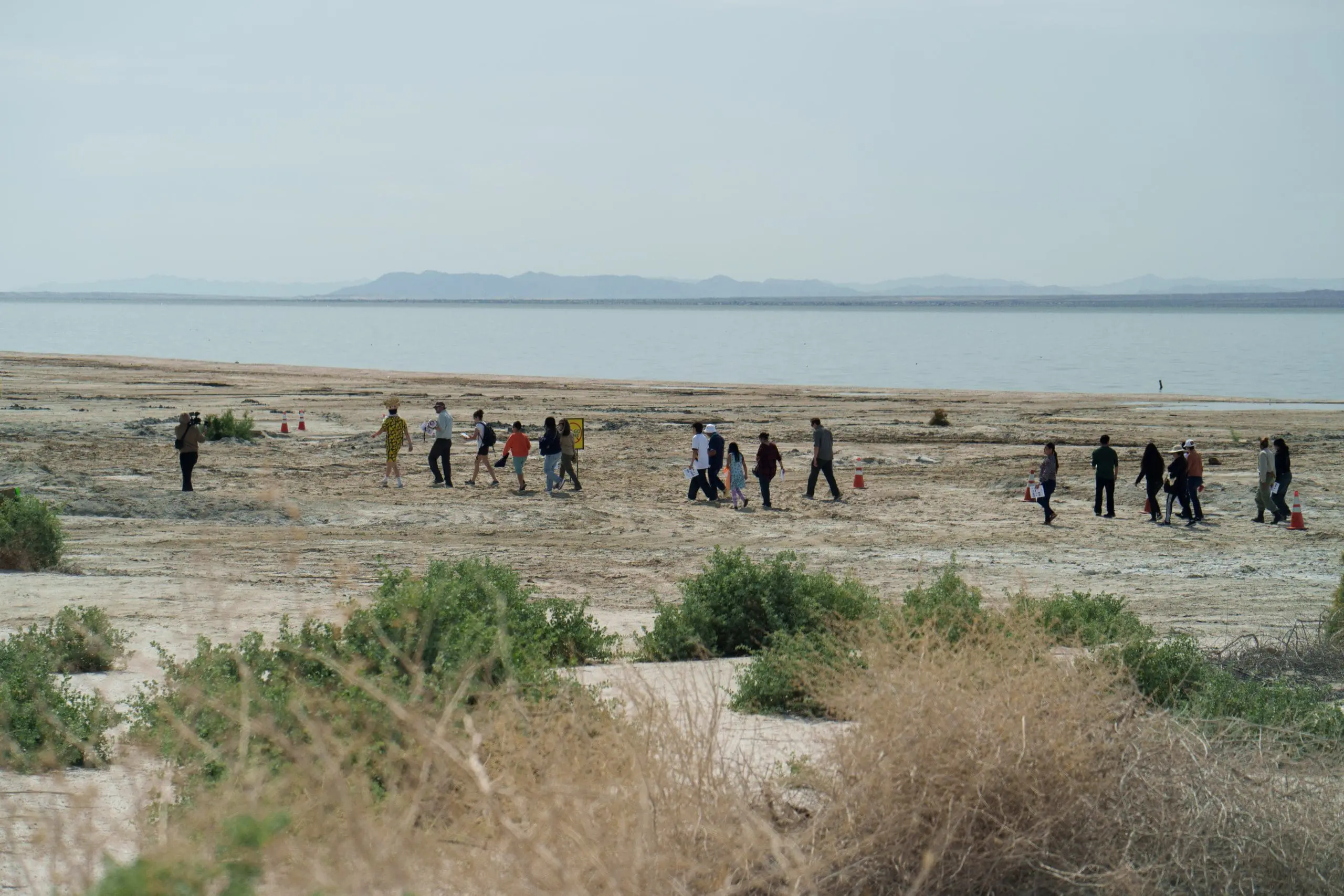
Since August 12, 2024, the surface elevation of the Salton Sea has fallen by about 10 inches and the Sea has shrunk by about 3,500 acres, exposing even more dust-emitting playa, degrading the health of the surrounding communities. The Sea is shrinking much faster than projects are being built to cover exposed playa. For comparison, it took eight years for IID to complete a total of 2,588 acres of dust control projects. The State of California completed a total of 2,303 acres of dust control projects from 2018-2023.
“The current rate of decline is alarming. At this pace, many ongoing projects that were planned prior to the DIP will become obsolete before completion, while others will deliver far less impact than expected,” said Isabella Arzeno-Soltero, assistant professor at UCLA. “The resources allocated to the IID should be used to mitigate the detrimental effects on surrounding communities and adapt existing projects to the accelerated water loss. The lack of transparency around fund allocation is a concern that must be addressed to ensure community and ecosystem resilience.”
California’s management objectives for the Salton Sea reflect the state’s regulatory, statutory, and contractual obligations to offset the many adverse impacts of the Quantification Settlement Agreement water transfers. IID was already conserving more than 500,000 AF per year prior to implementation of the DIP. The accelerated reduction in the size and elevation of the Salton Sea due to IID’s new water conservation efforts create additional impacts, exposing more dust-emitting lakebed, increasing salinity, and further challenging the state’s efforts to protect public and environmental health.
“While we applaud IID’s extraordinary water conservation efforts and willingness to help protect critical Colorado River reliability, the quick and dramatic decline of the Salton Sea since the implementation of these additional water conservation efforts points to the need for accelerated and additional efforts to protect environmental and public health in the region,” said Michael Cohen, senior associate at the Pacific Institute.
Krystal Otworth, Policy Advocate with Leadership Counsel, stated “While we acknowledge IID’s efforts to conserve Colorado River water, the Sea’s accelerated playa exposure is worsening public health and quality of life for residents in communities surrounding the Salton Sea. Although key projects are underway, they are insufficient to mitigate the severe impacts of the sea’s rapid recession. This urgent issue must be fully considered before implementing actions that risk further exacerbating these conditions.”
The IID board also approved an Indemnification Agreement, which “provides that [the California Natural Resources Agency] will defend, indemnify, and hold harmless IID with respect to any liability, requirement, expense, cost or obligation for any and all environmental impacts to the Salton Sea.” IID’s water conservation enables the federal government to release an additional $170 million to support the state’s Salton Sea projects, including the expansion of the Species Conservation Habitat project at the Sea’s south end.
“We are grateful that the 2003 Quantification Settlement Agreement strengthened water resiliency for coastal Southern California while reducing pressure on the Bay-Delta. That said, California’s water supply from the Colorado River hinges on the Salton Sea, and that means its health, and the health of the communities living near the Sea, must be a key state funding priority and solutions must be accelerated to meet this moment,” said Silvia Paz, Executive Director of Alianza Coachella Valley.
“IID’s water conservation efforts are a necessary and important part of reaching sustainability on the Colorado River, but they should be accomplished while also protecting the communities and wildlife that are already enduring harm due to the shrinking Salton Sea,” said Mike Lynes, Director of Policy for Audubon California. “The State of California deserves credit for accelerating at the Salton Sea in recent years, but the increasing challenge of additional water conservation requires that the State, IID, the federal government, and other partners make additional investments to rapidly complete projects that will protect people in the region and birds on the Pacific Flyway.”
For more information on the Salton Sea’s recent accelerated decline, see the detailed analysis at the bottom of the Salton Sea Environmental Timeseries home page.